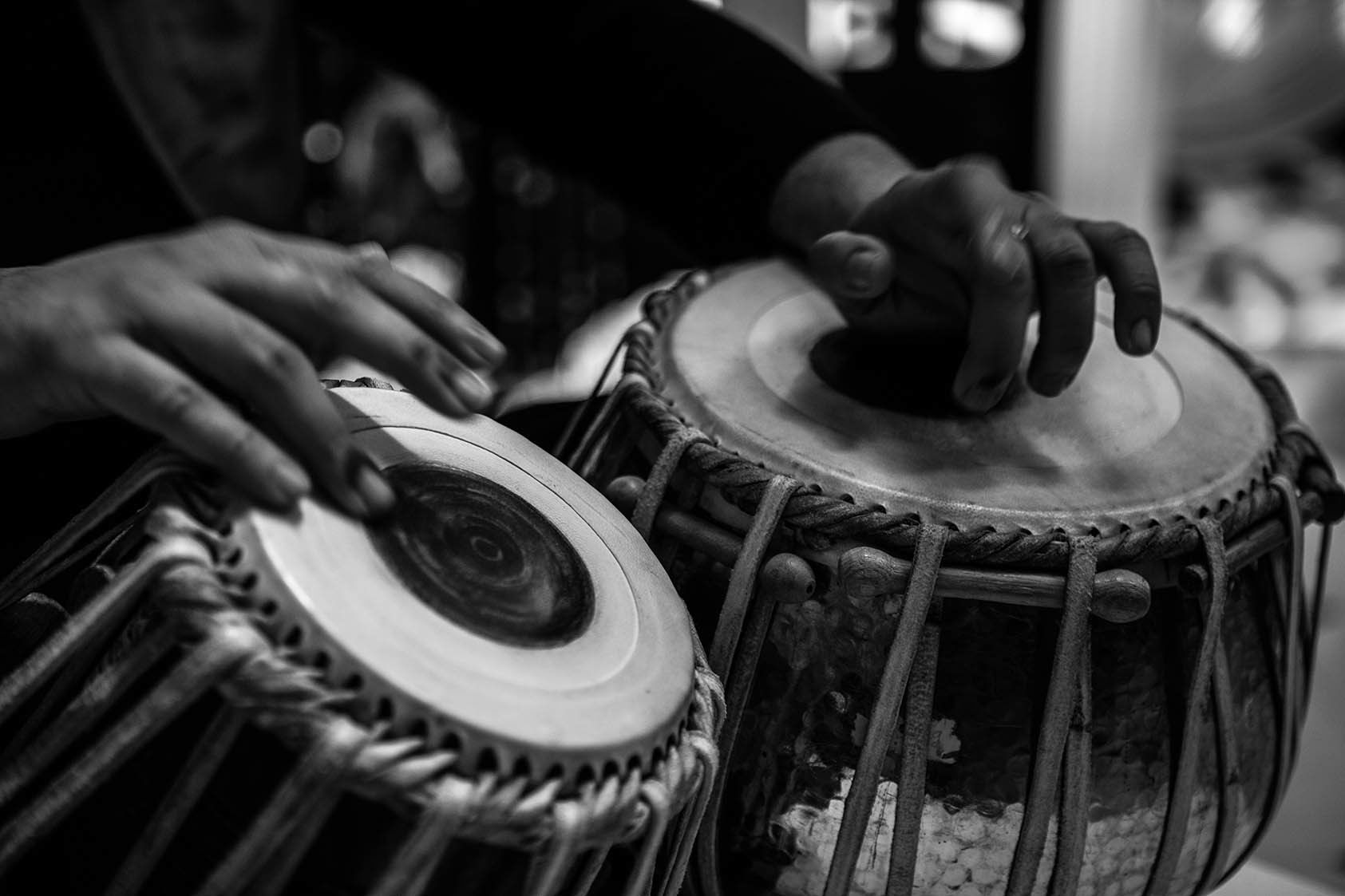
Music and classical dance share an inseparable relationship. In many cultures, dance, and music are not just forms of art but also serve as paths for transmitting cultural traditions, emotions, and stories. Classical dance forms rely heavily on music to enhance their beauty, meaning, and emotional impact
RHYTHMIC SYNCHRONISATION (Taala):
In classical dances rhythm is the most important aspect which is also referred to as taala. In short, taala is defined as time measures or tempo. In classical dances there are three different speeds which in South India are called as :Onang Kaalam : 1st speed (Vilamba taalam or slow speed)Rendaang Kaalam : 2nd speed ( Madhya taalam or medium speed)Moonaang Kaalam : 3rd speed ( Druta taalam or fast speed)Particular music is based on the particular taala or beat. The dancer aligns his/her movements according to the taala. The accuracy with which the dancer synchronizes their movements with these rhythms is what gives classical dance its structured elegance.The music in these dances decides the pace, and the dancer’s footwork becomes a representation of the rhythmic pattern, turning the dance into a visual representation of the music
Emotional Resonance:
Music has an unmatched ability to evoke emotions. In classical dance music is used to enrich the emotional depth of the performance. Music plays a crucial role in enhancing the emotions or rasa’s expressed by a dancer. The mood and tone of the music aligns with the dancer’s expression and gestures, creating a dynamic performance.
Narrative Enhancement:
In classical dances, dancers are often trained to use hand gestures (hastas) and facial expressions. Dance movements of classical dance forms often portray stories. Music plays a vital role in storytelling or narration.It helps to bring the story to life and guide the audience through its emotional and dramatic arc and sets the perfect mood story telling. Music and dance together portrays a few mythological stories which may include stories of Radha Krishna and many other deities.
Music and Dance are interdependent. Music is a heartbeat that brings dancer’s movements to life. It is the lifeblood that sustains the beauty and depth of classical dance, making it a timeless and universal form of artistic expression. Music in classical dance is not only about preserving the past but also about evolving and innovating while respecting its foundations.The interplay of music and movement elevates classical dance beyond mere physical performance, transforming it into a profound expression of human emotion, storytelling, and tradition.